

Cleft Lip and Palate Surgery in Ahmedabad: Right Age, Procedure, and Recovery Explained
Cleft Lip and Palate Surgery in Ahmedabad: Right Age, Procedure, and Recovery Explained Finding out that your baby has a...
Jaydeep Hospital – Best Pediatric Superspeciality Hospital In Ahmedabad
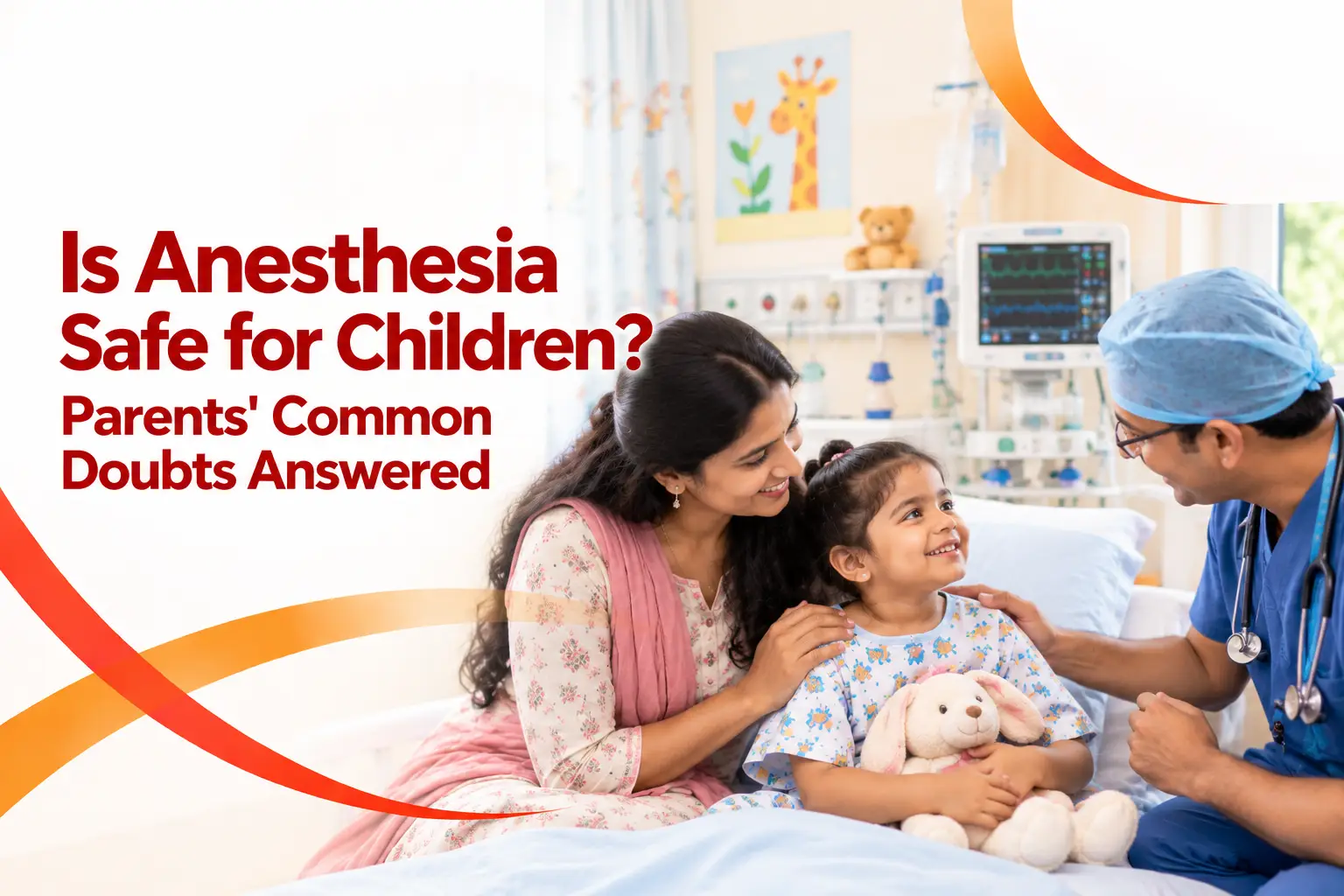
Is anesthesia safe for children? Modern anesthesia is generally considered very safe when it is administered by trained professionals in a facility equipped to care for children. The anesthesiologist selects medicines and doses according to the child’s age, weight, health, and procedure while continuously monitoring breathing, oxygen levels, heart rate, blood pressure, and temperature. However, no medical procedure is completely risk-free. Babies under one year, premature infants, and children with heart, lung, airway, neurological, or other complex medical conditions may require additional precautions and monitoring.
Understanding how pediatric anesthesia works can help parents prepare confidently and discuss their child’s individual risks with the surgical and anesthesia teams.
Anesthesia involves medicines that prevent pain and help a child remain comfortable during surgery, medical imaging, dental treatment, diagnostic testing, or another procedure.
The type used depends on the child’s health, age, procedure, expected duration, and ability to remain still.
General anesthesia places the child into a controlled state of unconsciousness. The child does not feel pain, move during the procedure, or remember what happened while the anesthesia was active.
Medicines may be given through a mask, an intravenous line, or a combination of both. The anesthesiologist remains responsible for the child’s breathing, circulation, comfort, and vital functions throughout the procedure.
Sedation helps a child relax or become sleepy. The depth can range from mild relaxation to deep sedation. Although sedation may sound less serious than general anesthesia, deeper levels can affect breathing and require appropriate monitoring, trained staff, and emergency equipment.
Regional anesthesia numbs a larger part of the body, while local anesthesia numbs a small area. These techniques may sometimes be used alone in older, cooperative children. More commonly, they are combined with general anesthesia to improve pain relief and reduce the amount of other medicine needed.
Children are not simply smaller adults. Their airways are narrower, their breathing and circulation can change more quickly, and medicine doses must be calculated carefully. Babies also lose body heat faster and may have different fluid and blood sugar requirements.
A pediatric anesthesiologist is trained to manage these age-specific needs. The specialist evaluates the child before surgery, plans the safest anesthesia approach, monitors the child throughout the procedure, and manages pain and recovery afterward.
Updated American Academy of Pediatrics guidance emphasizes that safe pediatric anesthesia requires properly trained professionals, child sized equipment, suitable monitoring, recovery facilities, emergency readiness, and access to additional hospital care when required.
The safety of general anesthesia in kids depends on careful planning before, during, and after the procedure.
Before surgery, the anesthesia team reviews:
During the procedure, the team continuously watches the child’s oxygen level, heart rate, blood pressure, breathing, temperature, and response to medication. The anesthesia dose can be adjusted immediately as the child’s condition or the surgical requirements change.
After surgery, trained recovery staff continue monitoring until the child is awake, breathing safely, and medically stable.
Most child anesthesia side effects are temporary and improve during the recovery period.
Common effects may include:
Some children wake calmly, while others become upset, confused, or difficult to comfort for a short period. This is sometimes called emergence agitation or emergence delirium. It can be distressing for parents but is usually temporary.
The anesthesia team may provide medicine to reduce nausea, vomiting, pain, or agitation when needed.
Serious anesthesia complications are uncommon, particularly in otherwise healthy children undergoing planned procedures.
However, possible risks can include:
The individual level of risk depends on the child’s age, medical condition, surgery, urgency, and type and duration of anesthesia.
Children under one year and those with complex medical conditions generally have a higher risk of serious anesthesia related complications than healthy older children. This makes specialist planning, child-specific equipment, appropriate staffing, and postoperative monitoring especially important.
Parents should ask the anesthesiologist to explain the risks that apply specifically to their child rather than relying only on general information.
Anesthesia risks in infants require special attention because babies have small airways, developing organs, limited physical reserves, and a greater tendency to lose body heat. Premature or previously premature babies may also have a higher risk of breathing pauses after anesthesia and may require prolonged postoperative monitoring.
Infants with congenital heart disease, airway differences, respiratory infections, neurological conditions, low birth weight, or a history of neonatal intensive care may need an individualized anesthesia plan.
The need for surgery must also be considered. Delaying treatment for an urgent congenital condition, infection, obstruction, injury, or other serious problem may create greater risk than proceeding with appropriately managed anesthesia.
This is one of the most common concerns among parents of babies and toddlers.
The United States Food and Drug Administration has warned that repeated exposure or lengthy use of general anesthetic and sedation medicines may affect brain development in children younger than three years. The concern is particularly relevant when procedures last longer than three hours or when several exposures are required.
However, available human evidence suggests that a single, relatively short exposure in an infant or toddler is unlikely to negatively affect learning or behavior. Research is continuing, and it is difficult to separate the possible effects of anesthesia from those of the medical condition that required surgery.
Parents should not cancel or postpone medically necessary surgery without speaking to the child’s surgeon and anesthesiologist. Necessary procedures should not be delayed when postponement could harm the child. For elective treatment, parents can discuss whether timing or combining procedures is medically appropriate.
Preparing for anesthesia before child surgery begins with giving the care team complete and accurate information.
Tell the anesthesiologist if your child has:
Do not hide a recent illness because you are worried that surgery might be postponed. Respiratory infections can influence airway management, and the anesthesia team must decide whether proceeding or rescheduling is safer.
Parents should also bring the child’s inhalers and relevant medical reports when instructed.
The hospital will provide specific instructions about when the child must stop eating and drinking. These instructions reduce the risk of stomach contents entering the lungs while the child is under anesthesia.
The permitted timing can differ for solid food, milk, breast milk, and clear liquids. Parents must follow the instructions supplied by their own anesthesia team rather than relying on general online fasting times.
Eating or drinking outside the permitted period may cause the procedure to be delayed or cancelled for safety reasons. Parents should also ask which regular medicines the child should take or avoid on the day of surgery.
Children often respond to their parents’ emotions. Calm, honest, age-appropriate explanations can reduce fear.
Tell younger children that they will receive special medicine that helps them sleep comfortably while the doctor completes the treatment. Avoid frightening words or promising that nothing will feel uncomfortable.
Older children may benefit from knowing:
A Favorite toy, blanket, book, or other comfort item may help when hospital policy allows it.
After the procedure, the child is moved to a recovery area where breathing, oxygen level, pulse, comfort, and alertness continue to be monitored.
Some children wake quickly, while others remain sleepy for several hours. Nausea, vomiting, sore throat, dizziness, or temporary irritability can occur. The recovery team may give fluids and medicines once it is safe to do so.
Before discharge, parents should receive instructions regarding:
An adult should supervise the child closely after discharge because balance, judgement, and coordination may remain temporarily affected.
Contact the hospital or seek urgent medical care if the child develops:
Symptoms related to the operation itself may differ from anesthesia side effects, so parents should follow the child’s personalized discharge plan.
Families searching for a pediatric anesthesiologist in Ahmedabad can consult the Pediatric Anesthesia Department at Jaydeep Hospital. The department provides anesthesia support for newborn, infant, childhood, emergency, minimally invasive, orthopedic, dental, and complex multispecialty procedures.
The pediatric anesthesia team uses child-specific protocols, monitoring systems, ventilators, anesthesia equipment, airway-management techniques, and postoperative pain strategies designed for children of different ages.
Jaydeep Hospital’s main branch is located in Nakamura, Ahmedabad. The hospital provides pediatric surgical, emergency, intensive-care, diagnostic, and recovery support for babies, children, and adolescents.
A pre-anesthesia consultation at Jaydeep Hospital allows parents to discuss their child’s health, fasting instructions, anesthesia plan, pain management, possible side effects, and expected recovery.
Modern anesthesia is generally very safe for a healthy child when provided by trained professionals with proper monitoring and child-specific equipment. The exact risk still depends on the procedure, age, medical history, and anesthesia plan.
A child under general anesthesia remains unconscious and does not feel the operation. The team also plans pain relief for the period after surgery.
The anesthesiologist continuously monitors the child and adjusts the medicines throughout the procedure. Awareness during appropriately managed general anesthesia is very uncommon.
Nausea and vomiting can occur after anesthesia or surgery. The team may give preventive or treatment medicine. Persistent vomiting, inability to drink, or signs of dehydration should be reported.
Not every mild cold requires postponement, but cough, fever, wheezing, breathing difficulty, or a recent respiratory infection must be reported. The anesthesiologist will assess whether proceeding is safe
Current human evidence suggests that one relatively short exposure is unlikely to negatively affect learning or behavior. Concerns are greater with repeated or prolonged exposure in children younger than three, although research continues.
Anesthesia is generally safe for children when it is planned and administered by an appropriately trained team in a child-ready medical environment. Careful health assessment, accurate dosing, continuous monitoring, suitable equipment, fasting compliance, and postoperative observation all contribute to safety.
Parents should share their child’s complete medical history, report recent illnesses, follow fasting instructions exactly, and ask questions about the individual benefits and risks.
For babies, premature infants, and children with complex health conditions, specialist pediatric anesthesia planning is especially valuable. When surgery is medically necessary, parents should not delay treatment because of general fears without first discussing the situation with the surgeon and pediatric anesthesiologist.
This article is intended for general education and does not replace a pre-anesthesia assessment, diagnosis, or personalized medical advice from a qualified pediatric anesthesiologist
Cleft Lip and Palate Surgery in Ahmedabad: Right Age, Procedure, and Recovery Explained Finding out that your baby has a...
Hernia in Children: Symptoms, Causes, and When Surgery Is Needed Hernia in children treatment depends mainly on the type and...
Is Anesthesia Safe for Children? Parents’ Common Doubts Answered Is anesthesia safe for children? Modern anesthesia is generally considered very...